


2025 was a year-long global storm, rivalling the chaos of some of the most turbulent events of our time. As we enter 2026, the eye of the storm may have passed, but the clouds of geopolitical friction between the world’s superpowers still hang heavy over the horizon. Thankfully, there are also some encouraging signals audible over the noise.
In 2026, as the market begins to price in heightened political tension and trade risks alongside escalating climate and nature risks, we shall need risk-informed decision-making to enable the non-fossil-fuel, non-armaments, majority of the world’s economy and investments to manage its risks and maintain progress.
Below are my reflections on the key sustainability-related challenges we faced, and what they mean for 2026.
Europe’s Sustainability Trauma
Europe bore the brunt of the setbacks caused by 2025’s storm. A particularly troubling development in 2025 was the European Commission’s ‘Omnibus’ regulation and its revisions to the Corporate Sustainability Reporting Directive (CSRD) and the Sustainable Finance Disclosure Regulation (SFDR), which many, including myself, read as a retreat from the EU’s sustainability commitment amidst rising geopolitical cross-winds. CSRD coverage was reduced, timelines were pushed back, mandatory was made voluntary, sector-specific standards were set aside, and assurance was limited. These changes may have eased the compliance pressure for some in the short term, but they have absolutely not removed any underlying economic exposure from climate breakdown and nature loss, which mandated and standardized sustainability reporting was designed to illuminate.
Yes, the first iterations of these regulations weren’t perfect and they placed high demands on both preparers and users of data. But that does not mean that delays in implementation should be continuous and the simplification agenda endless. We are encouraged by the further emphasis on risk materiality in the simplified ESRS and their greater alignment with IFRS standards. As we look ahead to 2026, the real test will be whether the European Commission holds to its own timelines and allows the second half of 2026 to be one that is centred around action, implementation and active risk management rather than renegotiation.
Mandated versus Voluntary reporting
Beyond the compliance perimeters, voluntary reporting tries to fill the gap. The IFRS Sustainability Disclosure Standards (IFRS S1 and S2) are becoming the closest thing we have to a global financial-market baseline for sustainability risk reporting. Thirty-seven jurisdictions have adopted or are moving towards introducing these ISSB Standards. Whilst ISSB was politically driven initially to deny impact materiality, their integration of the Taskforce on Nature-related Financial Disclosures (TNFD) addresses some of this gap and strengthens their credibility as the emerging dominant standard for sustainability reporting, while also reaffirming nature as a key focus area, moving forward.
But here’s the hard truth: voluntary disclosure has a ceiling. Voluntary regimes can produce less pages, but not necessarily better decisions. They invite cherry-picking, reward the best storytellers, and punish the most candid. To create what the market actually needs, that is, consistent, decision-useful baselines that allow capital to price in risks and impacts – regulatory recognition of climate and nature-related risks as financially material is necessary to drive further market adoption.
We are beginning to see exactly that kind of recognition emerge, as voluntary standards are hardened into national frameworks. Brazilian and Japanese governments have both recognized the importance of climate and nature to their respective economies and understood the financial risks associated with continued degradation. Brazil is paving the way by transforming IFRS S1 and S2 into local market mandates. Japan, meanwhile, has rapidly become a global leader in nature-related assessment.
This regulatory tightening reflects a deepening consensus that sustainability issues are arguably the most serious prudential risks of our time. It is no longer just about transparency, but financial stability. The Basel Committee and financial regulators across the EU, India, Singapore, China, and Canada are effectively ending the debate by mandating climate risk considerations within their jurisdictions. Switzerland’s FINMA has gone further still, explicitly binding nature-related risks to these climate mandates, a move that signals just how quickly the definition of ‘material risk’ is expanding.
Split-screen Reality of 2026
Yes, I am frustrated by the political backtracking of 2025. But I’m also energised by what’s to come. The story of the next few years begins, but does not end, with delay. The machinery of alignment is still advancing—quietly, technically, and with growing inevitability.
So here is the split-screen reality we shall all have to manage in 2026:
- A world where some policymakers slow-walk, dilute, or delay the great transition, and;
- A world where capital markets, leading jurisdictions, and leading companies continue building the disclosure and data infrastructure needed for a 21st-century economy.
We must not, however, confuse political weather with economic climate. The world’s economy still has planetary boundaries. Nature still defines its terms. And whether corporate and investor regulation tightens or loosens in a given year, the underlying risks for companies and portfolios simply will not go away.
The following core questions will remain:
- Where are the material sustainability-related risks and opportunities that will affect cash flows and cost of capital?
- Where are the material dependencies and impacts on nature that create exposure, disruption, and liability?
- What is actually changing on the ground, in portfolios, and along complex value chains?
Our challenge is to find investment-grade answers to these questions: using data that’s trusted, comparable, auditable, and decision-useful. In an uncertain, ambiguous, fragmented, regulated world, superior data and informed decisions are the only hedge against volatility risks.
To answer these questions, we must accept a fundamental shift in how we view the market: nature risk is climate risk, and climate risk is financial risk.
We must move beyond qualitative assessment to hard quantification, capturing the specific pathways through which ecological costs are forced back onto a balance sheet. Whether triggered by new regulations, litigation, or shifting market preferences, the era of treating nature as a free lunch is ending. By measuring hidden liabilities, we can distinguish the companies that are truly resilient from those whose profitability is merely an expiring lease on a vanishing environmental subsidy.
Lessons from the Amazon
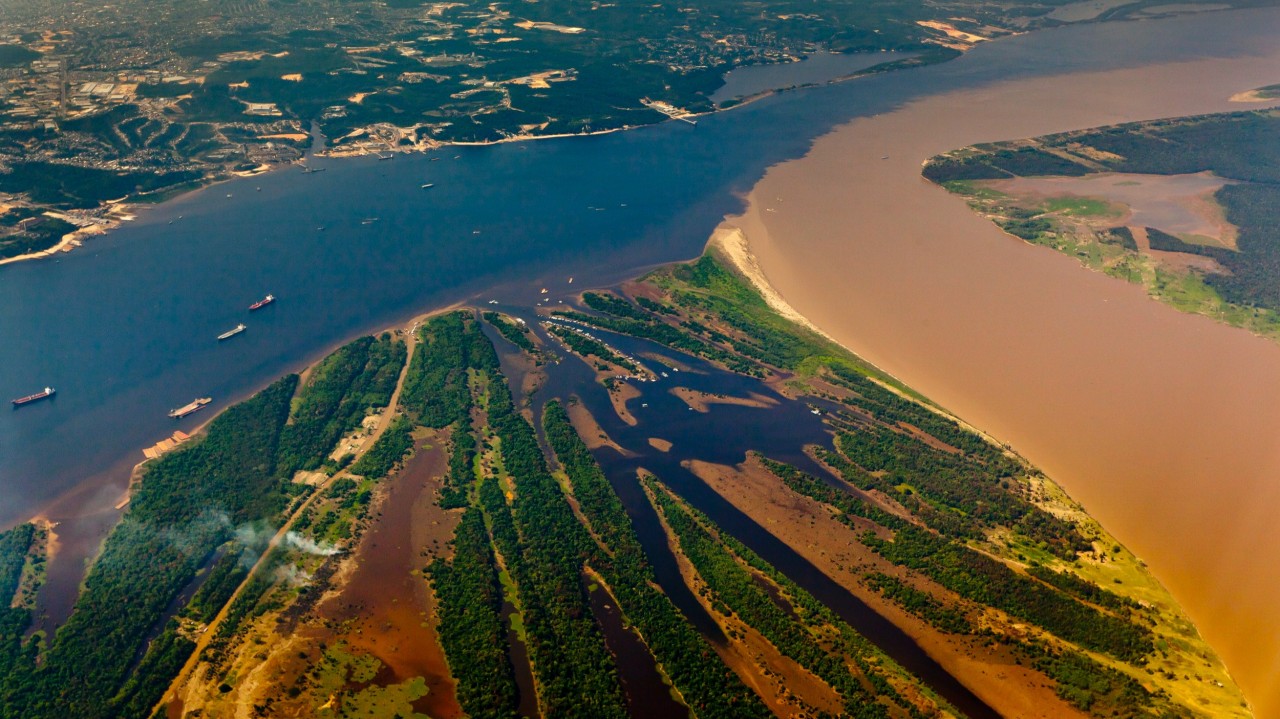
Which brings me to Manaus, on the banks of the Amazon, 1,450 km up-river from Belém, the city which hosted UNFCCC’s Climate COP-30. At Manaus is the Encontro das Águas (see picture above) where the cool, white waters of the muddy Solimões, flowing down from the Andes, meet the dark, warm waters of the Rio Negro, coming in from the rainforests. For six kilometres,these two currents run side by side—distinct, unmixed—before the river finally becomes one.
This is 2026!
Two currents in one river: political pushback against sustainability, and the need to integrate sustainability-related risks into business and investment… Yes, they may run alongside each other for quite a while. They may even look, from the bank, like separate realities. But they share the same channel. And downstream, they must mix.
So, my friends, belt up for the ride. We intend to keep steering with data, not slogans. We shall prevail, with insights and informed decisions, against the tide of ‘might-is-right’ revisionism.