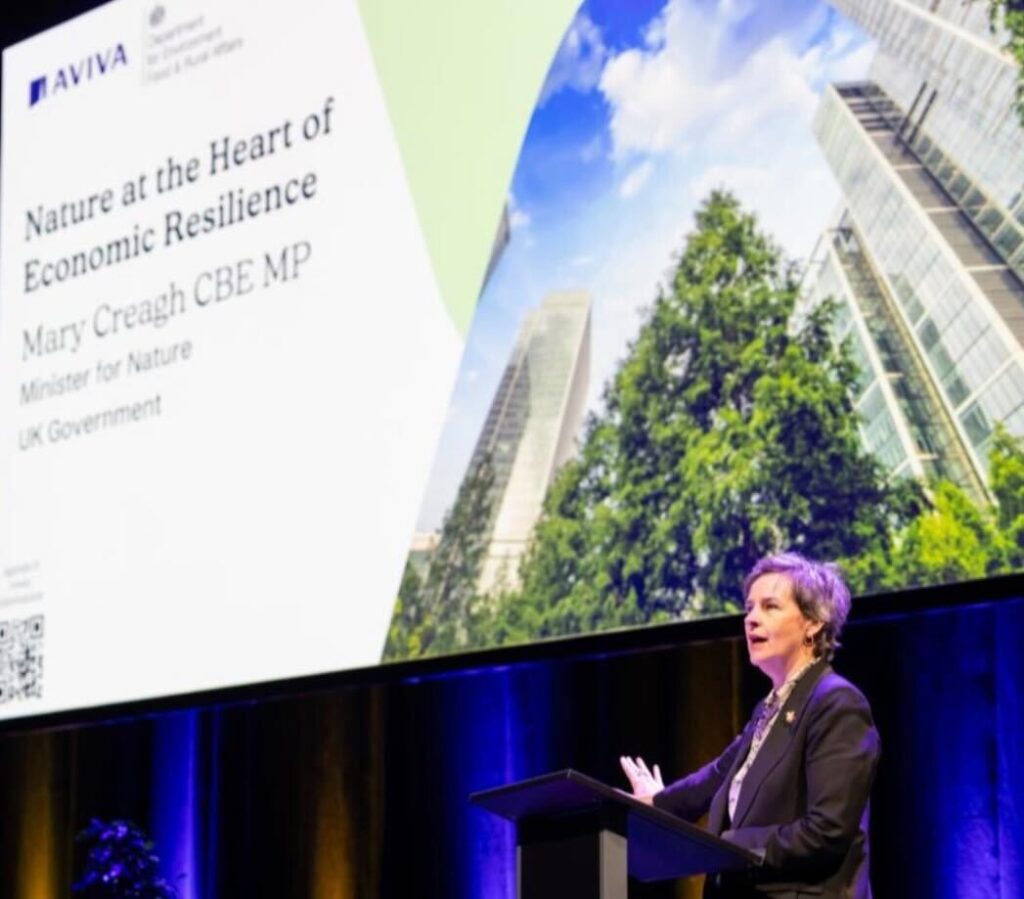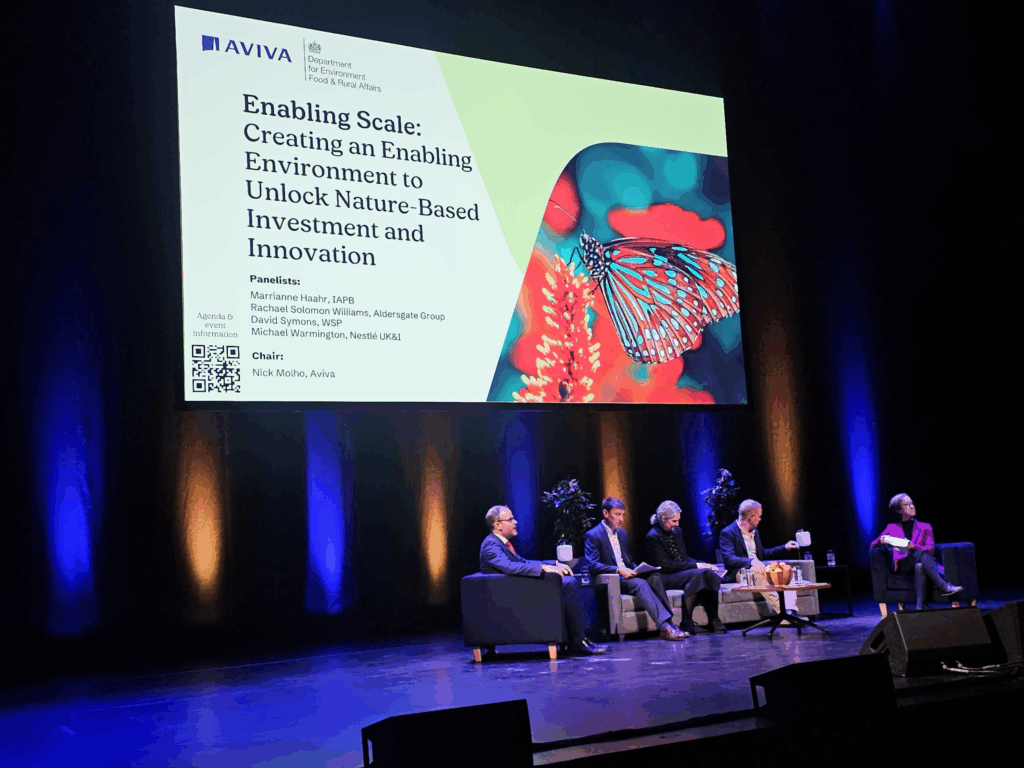



Earlier this month, I had the opportunity to represent GIST Impact at the IPBES-12 Business & Finance discussions in Manchester. Hosted by Aviva and Defra, the session brought together leaders from Lloyds Banking Group, Barclays, the Finance for Biodiversity Foundation and Nature North, among others, around a shared challenge: how we understand, measure and respond to nature-related risks.
Below are five takeaways that stood out from the discussions.
Action over perfection
Data will never be perfect, but that cannot stall the pace of action. Panelists stressed that waiting for “perfect” modelling is a luxury the planet cannot afford. Institutions need the confidence to move forward based on the evidence available today, while continuing to improve approaches over time.
Nature is a monopoly provider
This framing stood out immediately. Nature provides services for which there are no substitutes. We cannot diversify away from functioning ecosystems.
The risks to the private sector — from supply chain disruptions to food system instability — are becoming critical emerging issues.
No net zero without nature
Climate and biodiversity challenges cannot be solved in isolation. While nature has intrinsic moral value, discussions reinforced the growing recognition of its extrinsic value to the economy and financial stability.
The limits of portfolio diversification
For decades, diversification has been a core tool for managing risk. Climate and nature risks challenge that logic. These risks are systemic, exposing portfolios across asset classes and geographies, particularly in emerging markets.
Prioritising nature-based solutions
Encouragingly, nature-based solutions are increasingly being viewed as first-choice infrastructure options. Regenerative agriculture was cited as a leading example — limiting negative impacts while improving product quality — despite the uncertainty the sector currently faces.
My key takeaway
IPBES-12 highlighted the growing momentum to treat nature as an investable asset class. However, we must address the elephant in the room: the environmental footprint of company operations is still the root cause.
We need a dual-sword approach: mobilising private capital towards nature, while tightening accountability for reducing impacts through policy. Pushback on regulation risks undermining this progress.
We have the common evidence base. Let’s not wait for the “perfect” data set to start the work.