



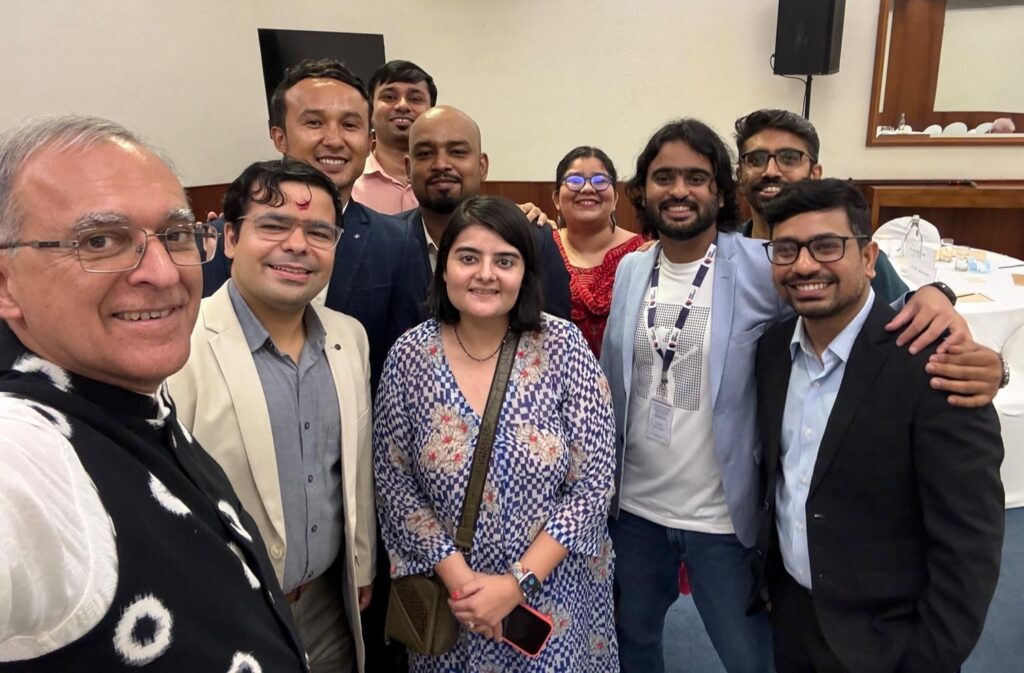
On 26 August 2026, social impact champions, regulators, corporate leaders and public health experts gathered together in New Delhi, and sat around one table to ask a deceptively simple question. What if the way we measure profit has been hiding the real cost of doing business all along?
The event marked the launch of a new book, titled ‘The Accounting Paradox,’ by Jeremy Nicholls, an Ashoka fellow, co-founder of Social Value International and one of the principal architects of the Social Return on Investment (SROI) methodology for impact accounting. We kicked off with a panel discussion led by Dr. Ashok Khosla, in discussion with Dr. Soumya Swaminathan, Nandakumar S. Tirumalai, Revathi Kollegala, and our CEO, Pavan Sukhdev on the panel. Here are the highlights that stayed with us.
Takeaway 1: GDP tells only half the story
Dr. Khosla opened with a sharp example saying that cutting down a forest for matchsticks adds to a country’s GDP. However, leaving that same forest standing to regenerate soil, pollinate crops and purify water adds nothing to the official numbers. Contributing to this conversation was Jairam Ramesh (Member of Parliament in the Rajya Sabha), who traced this blind spot to sixteen years ago, when Sir Partha Dasgupta was commissioned to build an environmentally adjusted accounting framework for India. The idea stalled because it risked lowering headline growth figures. Today, mechanisms like Europe’s Carbon Border Adjustment Mechanism are reviving that conversation to address unaccounted-for externalities.
He also added that while national policies lag, corporate action is accelerating rapidly. Driven by investor pressure and CBAM-like mandates for supply-chain traceability, heavy industries like steel, cement, and aluminum are actively auditing and reporting their lifecycle impacts across water, land, and pollution.

Takeaway 2: The glass wall between profit and harm
Jeremy Nicholls described financial accounting as a one way mirror. Companies track their income and legal costs in sharp detail, while the social and environmental harm they cause stays hidden on the other side of the glass. He pointed to the UK’s food system as a clear illustration: the annual cost of Britain’s unhealthy food system is in the hundreds of billions of Pounds, a figure that comes close to matching the UK’s entire annual healthcare budget. Healthcare costs alone account for tens of billions of that total, with governments and households directly covering a similar amount each year managing food-related illness.
Takeaway 3: Turning principle into practice
The panel grounded these ideas in reality. Dr. Swaminathan reframed environmental damage as a public health emergency, pointing to air pollution’s role in 14% of India’s disability burden and up to a fifth of its deaths. Nandakumar Tirumalai offered the corporate view: forcing every externality onto the balance sheet overnight would collapse EBITDA figures, so a phased approach matters, especially given that India’s Business Responsibility and Sustainability Reporting (BRSR) framework already ranks among the world’s strictest. Revathi Kollegala pushed for accounting standards rooted in local context and community priorities. Pavan Sukhdev argued that real change starts with honest footnote disclosures, backed by clear standard setting and growing investor demand.

Takeaway 4: India is already moving
Dr. Rakesh Mohan closed the discussion by tracing India’s own journey. In 2014, India began requiring large companies to spend 2% of profits on social causes. By 2019, they also had to file a Business Responsibility Report, a plain account of how responsibly they operate. Today’s stricter version, BRSR Core, brings in independent auditors and requires companies to track emissions across their entire supply chain. He framed India’s Corporate Social Responsibility (CSR) spend as a way of patching up damage after the fact. True prevention, he argued, belongs inside core accounting practice built in from the start.
The room landed on a shared conclusion: real reform means mandatory disclosure of hidden costs, accounting standards that formally recognise social and environmental obligations, and investors willing to price that risk into their decisions.
Ready to bring impact accounting into your own reporting or investment strategy?