
As biodiversity loss and extreme weather events accelerate in a warming world, safeguarding assets against climate and nature risks has become critical. Building the capacity to adapt to and address these risks is becoming a core factor of today’s strategic landscape. Understanding nature and climate risk, their similarities, differences, and applications is crucial for effective risk management, regulatory reporting, and long-term stewardship.
What is climate risk?
Climate risk refers to the potential negative effects of climate change on the environment, businesses, and society. It is determined by three components: hazard (the climate event), exposure (presence of assets in hazard areas), and vulnerability (susceptibility to damage).
Climate risk includes physical risks (which occur as either acute or chronic events), and transition risks.
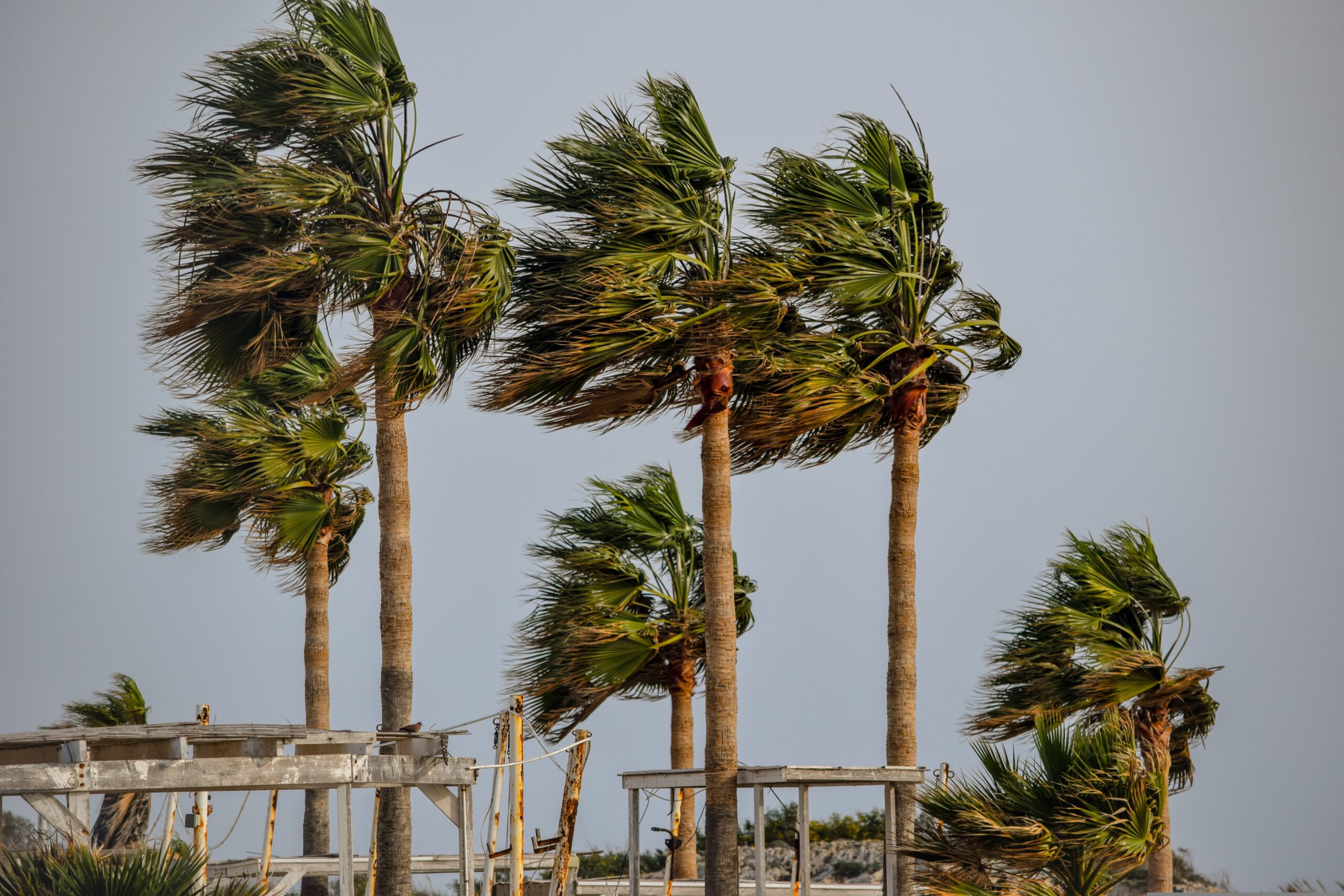
- Acute physical risks: These involve sudden, extreme occurrences such as a cyclone or flood.
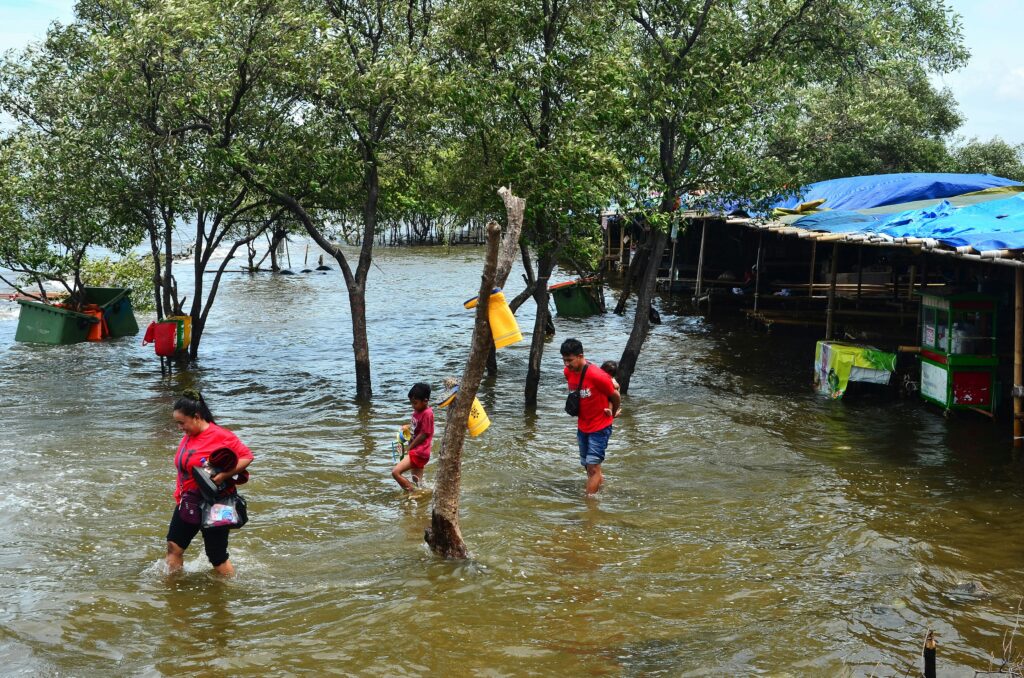
- Chronic physical risks: These involve long-term, progressive shifts such as sea level rise and prolonged water scarcity.
Transition risks are the financial and business risks that arise from the shift to a low-carbon, nature-positive economy. The core idea is that even if a company isn’t directly impacted by a physical climate or nature event, the process of transitioning away from the systems causing those events creates its own set of risks, particularly for companies that are slow to adapt.
What is nature risk?
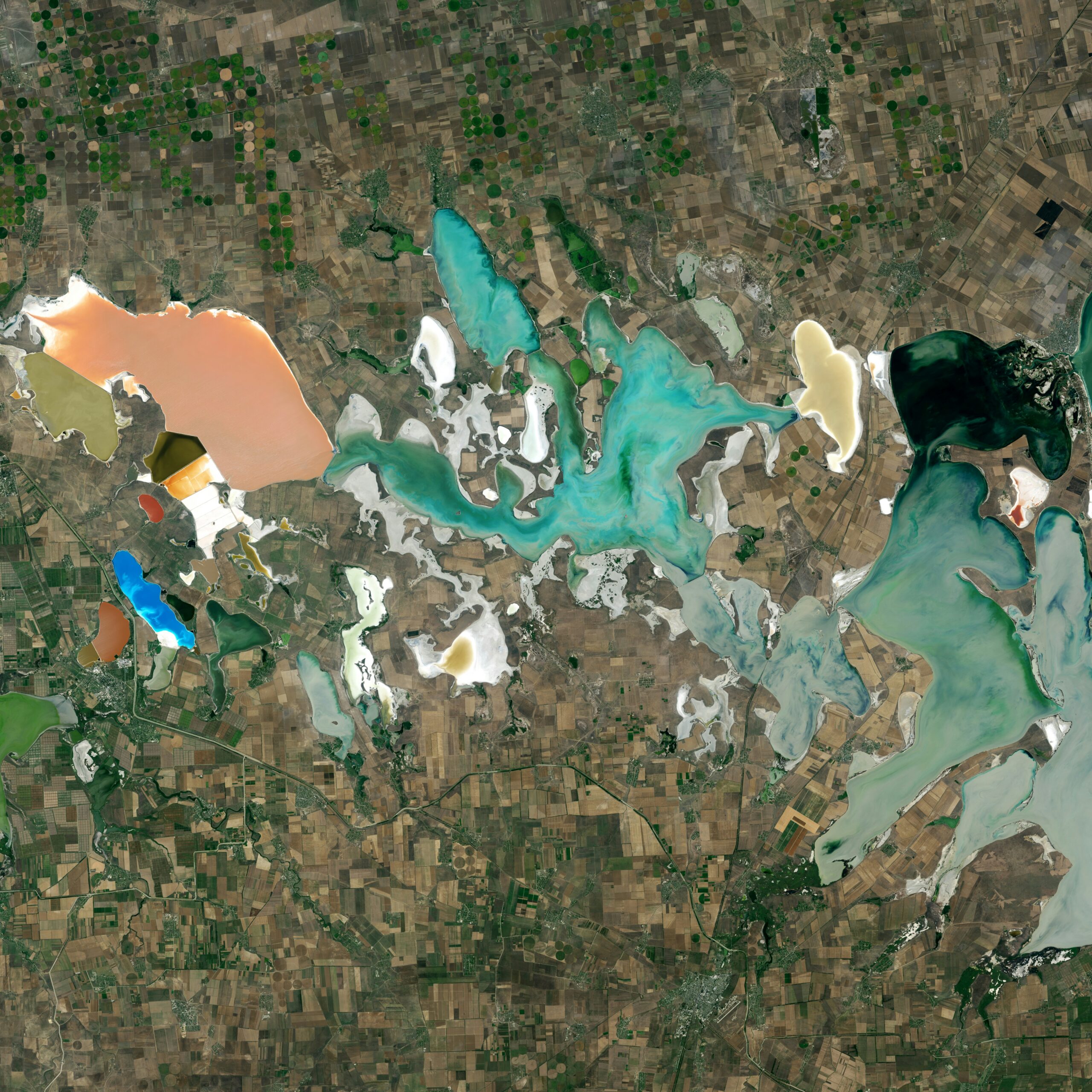
Nature risk refers to the financial and business risks that arise from an organisation’s dependencies on, and impacts to, the natural world. It can manifest across multiple risk categories – operational, financial, reputational, regulatory, and transitional – making it relevant to virtually every sector.
Every organisation relies on natural capital, either directly or via its supply chain. Natural capital is more than the biotic (living) stock of natural assets that make up our planet’s living systems – soils, freshwater, forests, oceans, and biodiversity – but also includes abiotic stock such as minerals, fossil fuels, subterranean water, etc.
Natural capital, defined by TEEB, is therefore an economic metaphor for the limited stocks of physical and biological resources found on earth, and of the limited capacity of ecosystems to provide ecosystem services.
These resources generate ecosystem services. These are the functions that nature performs (at no cost) which underpin economic activity, such as water purification, pollination, climate regulation, and flood protection.
When these services are degraded or disrupted, the consequences are tangible. A food producer reliant on pollination for crop yields, a beverage company dependent on clean water sources, or a chip manufacturer drawing on a watershed that’s under stress – each faces real financial exposure when the natural systems they depend on begin to fail or degrade.
It’s important to note that nature risk also flows in the other direction. Businesses that damage natural systems – through land use change, pollution, or resource overextraction – face growing regulatory, legal, and reputational consequences. This is because frameworks like TNFD and CSRD raise the bar for transparency and accountability.
Understanding nature risk means mapping both what your business takes from nature (its dependencies) and what it does to it (its impacts). It also means pricing in the possibility that either could change.
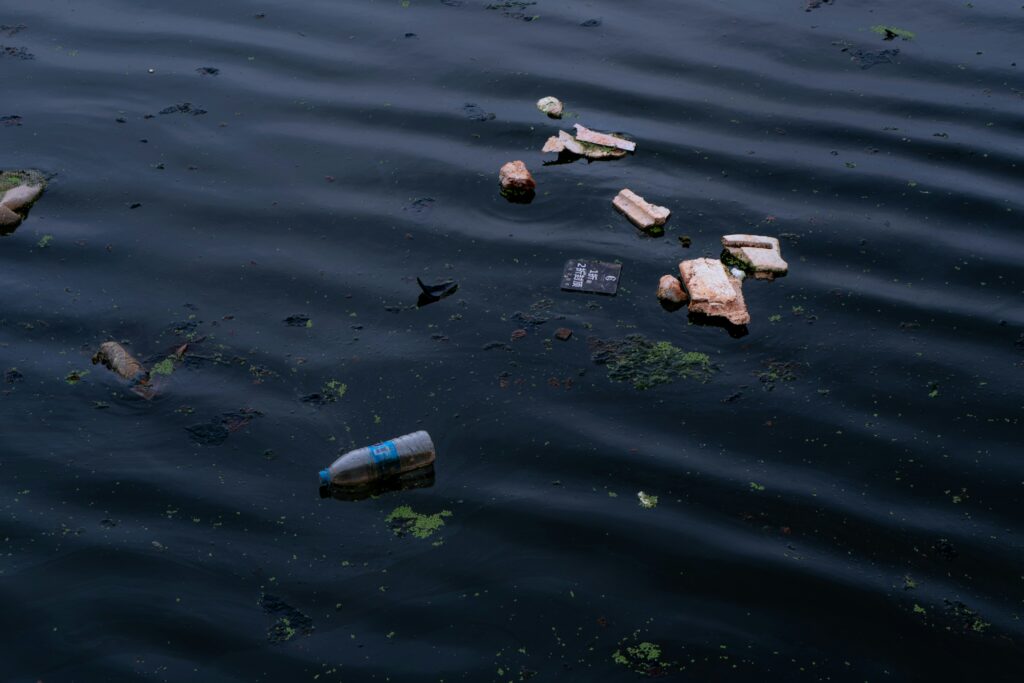
Photo by Xianyu hao on Unsplash
The relationship between climate and nature risk
Climate risk and nature risk represent two distinct yet inseparable lenses to approach risk. The following example demonstrates both risks in action:
Consider a data centre located in an area facing extreme temperatures and a stressed local water supply.
- The Climate Risk: Frequent and extreme heatwaves represent an acute physical risk. These events strain cooling systems and spike energy demand. Simultaneously, rising average temperatures constitute a chronic physical risk, increasing long-term operational costs.
- The Nature Risk: Data centres depend on large volumes of local freshwater for evaporative cooling. If the surrounding ecosystem suffers from degradation or water stress, the centre faces a shortage of vital ecosystem services. This decline in water availability threatens the production ability of the centre.
The above risks work in tandem to influence business resilience. Climate change acts as a driver that increases the frequency of heatwaves and raises average temperatures. This rising heat creates a higher demand for water to cool the data centre. In turn, this increased demand worsens local water scarcity.
The pressure on local ecosystem services, such as groundwater replenishment, reduces the centre’s ability to adapt to extreme heat, thereby creating a positive feedback loop:
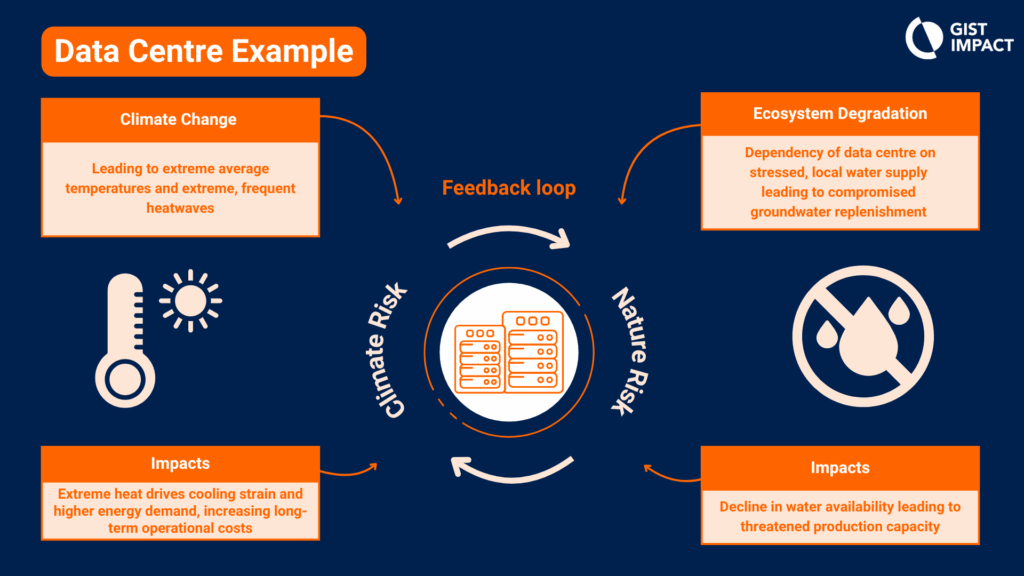
This example illustrates the benefit of addressing climate and nature risks together to create a more robust resilience strategy – one that better protects operational continuity than treating them in isolation.
Similarities and differences between climate and nature risk
Similarities
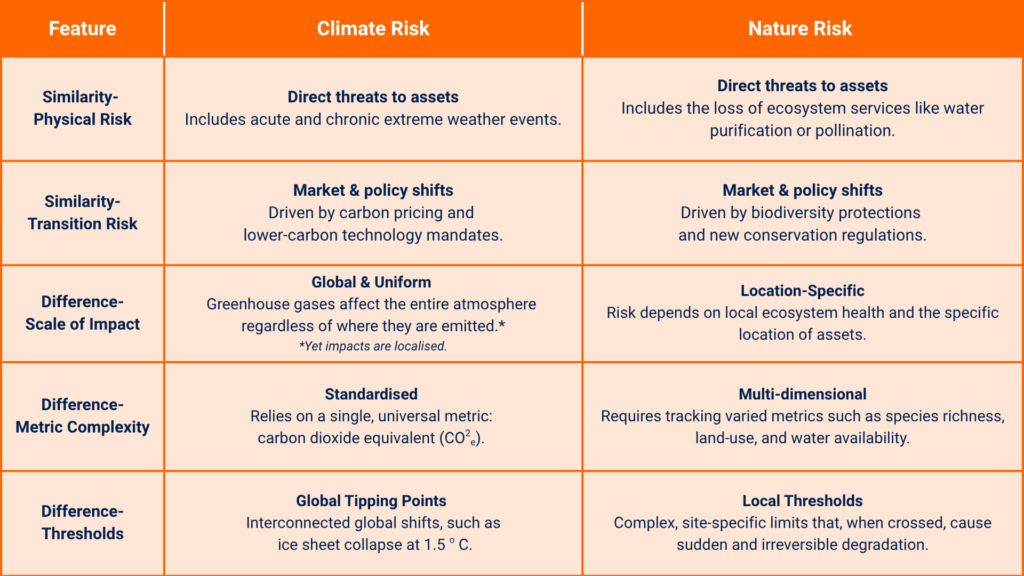
Climate and nature risks are similar in their structure and financial impact. Both risks follow the established categories of physical and transition risks.
- Physical Risks: Both involve direct threats to assets and operations. Climate physical risks include extreme weather events, while nature physical risks include the loss of essential ecosystem services like water purification or pollination. In risk management, both require assessing the physical vulnerability of specific sites.
- Transition Risks: Both risks arise from shifts in policy, technology, and market preferences. New regulations, such as carbon taxes or biodiversity protections, mean companies must adapt to remain compliant. This creates a shared requirement for regulatory reporting across both categories.
Differences
- Scale of Impact: While greenhouse gas emissions contribute to global warming more broadly, climate risk, just like nature risk, is highly location-specific. This is because temperatures, and associated fluctuating weather events vary drastically by region.
- There is no ‘global average’ of nature risk – a company is exposed to specific hazards based on where its assets are located due to localised vulnerabilities. This is why effective stewardship to manage and increase resilience to risk requires an approach that’s tailored to the specific needs of each ecosystem, and the assets situated within it.
- Metric Complexity: Climate risk assessment is anchored by a single, widely adopted metric – CO2e, which enables comparability and aggregation across portfolios. Nature risk, by contrast, is more nascent and inherently multi-dimensional, requiring a range of metrics such as species richness, land-use change, and water availability, which vary by geography, ecosystem, and business activity – making standardisation significantly more challenging.
- Ecosystem Thresholds: Nature risk involves complex local thresholds. When an ecosystem reaches a certain level of degradation, it can experience sudden and irreversible changes. These events create unpredictable challenges for business continuity. Climate risk has multiple, interconnected thresholds where a small increase in global temperature causes self-reinforcing, irreversible changes (positive feedback loops). Thresholds such as the collapse of West Antarctic ice sheets, are expected to be crossed if global warming reaches 1.5°C.
Key takeaway
Every organisation has a relationship with nature – whether they’ve mapped it or not.
The businesses and investors that understand where they depend on natural systems, and where they impact them, are better positioned to manage risk. Additionally, they can meet regulatory expectations, and make more informed capital allocation decisions. Nature and climate risk are not separate agendas – they are two sides of the same resilience challenge. Organisations that treat them as such won’t just be better prepared for what’s coming; they’ll be ahead of those that aren’t.
—
Ready to see where nature risk sits in your portfolio? Get in touch with our team.