

There was a distinct shift in the air at COP17 in Yerevan. The conversation has evolved, and one question governed every room: how exactly does nature translate in financial terms? Delegates were looking for concrete ways nature impacts financial statements.
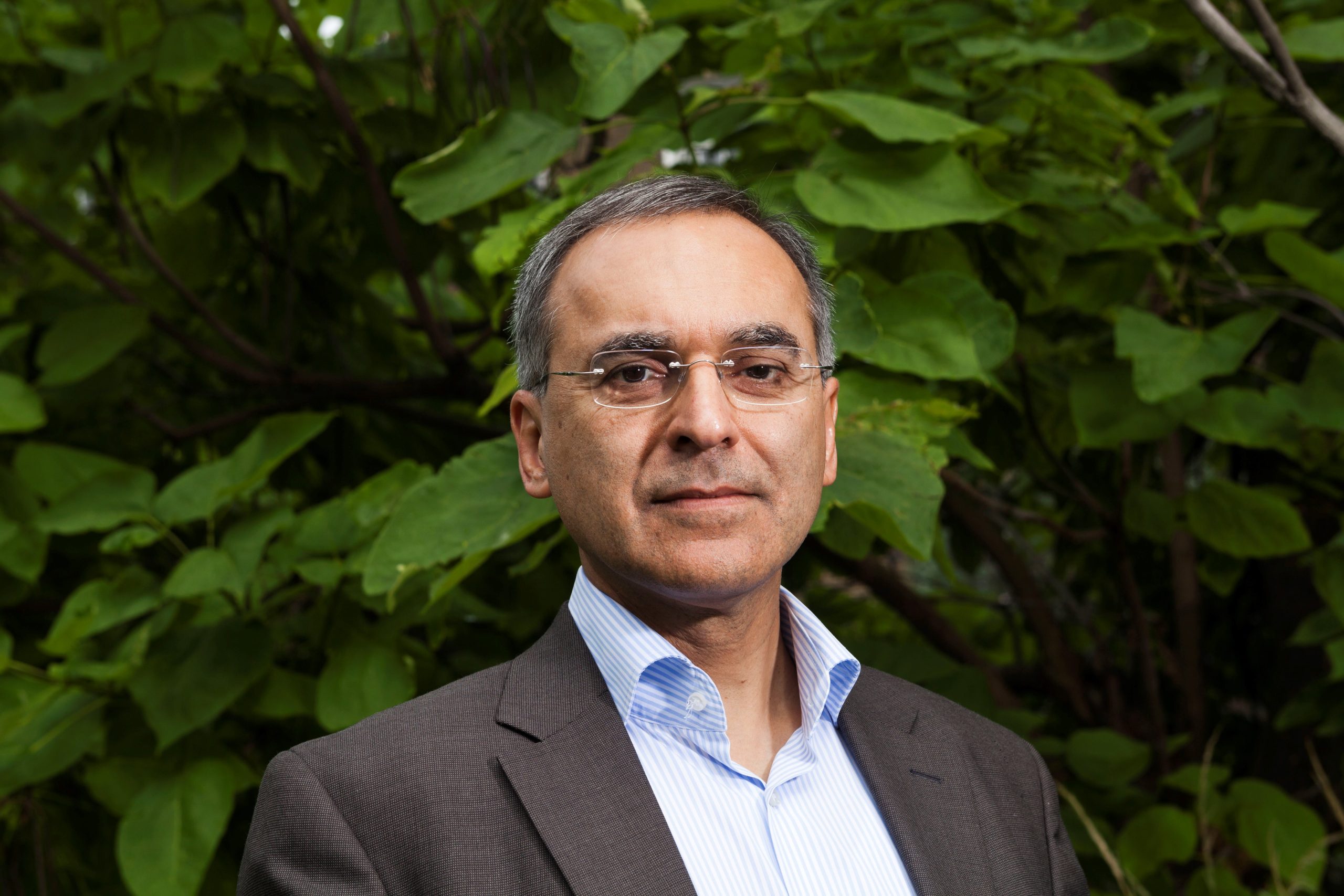
To bring the insights from the conference directly to you, our Founder and CEO, Pavan Sukhdev, and Chief Growth Officer, Mahima Sukhdev, have distilled their key takeaways. Pavan zooms out to capture the macro perspective, while Mahima answers some rapid-fire questions: what’s shifting, what’s still missing, what our next steps should be, and one line that stuck with her from the event.
The macro: Pavan’s takeaways
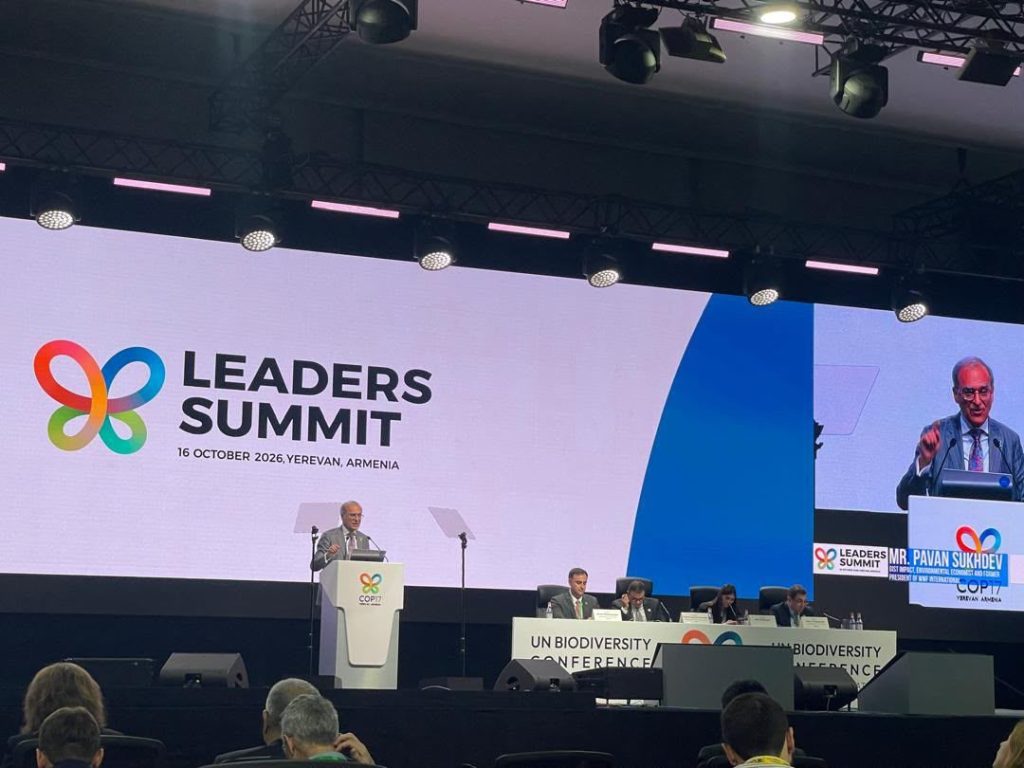
- Nature is economic infrastructure.
Around half of world GDP depends on nature. A single one-in-a-hundred-year drought could put up to 24% of euro-area output at risk. - Finance follows visible value.
During Frank Elderson’s keynote at COP17’s Finance and Biodiversity Day, he asked how to mobilise finance at scale, make nature bankable and fund public goods. All three come down to one question: can decision makers see the value at stake? Where they can, capital moves. - Visibility needs better measurement.
Most pressure on species comes from far away, through emissions, water, pollution and waste. One key example he cites is of a mining organisation in GIST Impact’s database that had an impact of over 2,000 km² land-conversion-equivalent, against a mined area of 5 to 7 km².
Evidently, what needs to come next is that central banks and supervisors should assess nature value-at-risk alongside climate risk, and governments should redirect the almost USD 1.5 trillion in direct subsidies, as Target 18 of the Kunming-Montreal Global Biodiversity Framework asks.
Mahima’s thoughts from being on the ground
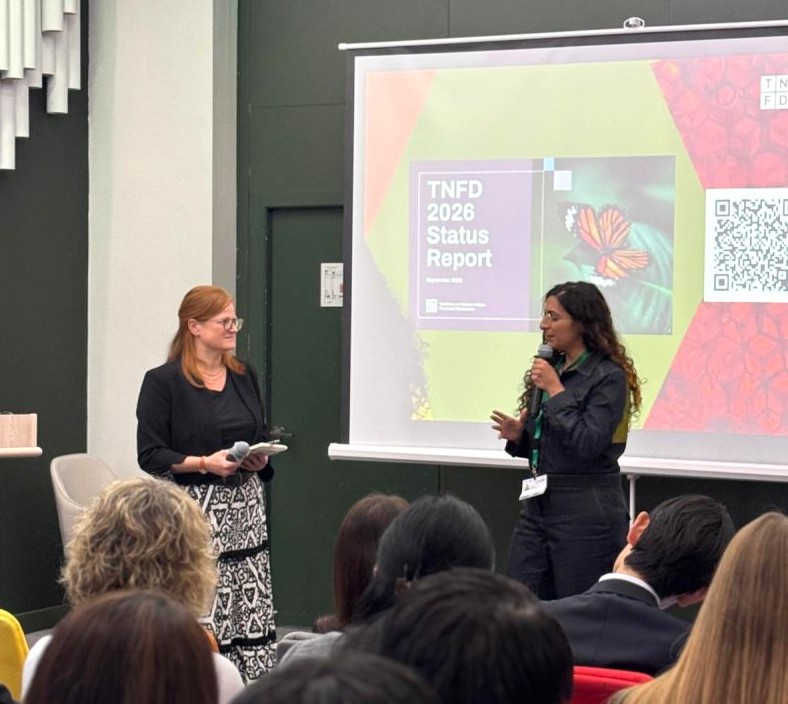
We asked Mahima four rapid-fire questions: what’s shifting, what’s still missing, what our next steps should be, and one line that stuck with her after the event ended. Here’s what she had to say:
1. What’s shifting for financial institutions?
Nature is now a resilience story.
With ESG under political pressure and sustainability budgets tight, the case for nature at COP17 was made in commercial terms.
“Sustainability budget cuts don’t make a business any less dependent on nature. I heard commercial banks talk about ecosystem services in terms of continuity of production, dependable supplies and stable operating costs. Whatever the driver, the resulting acuity is a very good thing.”
The questions are sharper.
Financial institutions now ask how nature affects a specific lending or investment decision, and they recognise that different decisions need different data.
She gave an example, “An agricultural lender assessing one borrower and an equity investor screening thousands of companies need different data. People are now working through those differences.”
Policy engagement is part of stewardship.
Investors increasingly see engaging governments as part of their job, because subsidies and regulation set the commercial case for change. At COP17 they spoke collectively through the Finance for Biodiversity Foundation, whose community spans more than 220 financial institutions. With Business for Nature, it coordinated an open letter from over 130 businesses and financial institutions urging governments to reform at least US$2.6 trillion a year of public spending that harms nature, the goal of Target 18 of the Kunming-Montreal Global Biodiversity Framework. Triodos Bank presented it to ministers from nine countries at a ministerial dialogue on subsidy reform.
Mahima appreciated that Storebrand Asset Management, Federated Hermes and Triodos Bank showed real leadership, with C-suite level representation and active engagement with ministers. The Foundation’s closing assessment points to growing momentum on incentive reform under COP17’s new Yerevan Pathway.
Frameworks are joining up.
In October, the Taskforce on Nature-related Financial Disclosures (TNFD) released LEAP 2.0, its updated approach for assessing nature-related risks. It now aligns more closely with the Science Based Targets Network (SBTN) and the Nature Positive Initiative’s state-of-nature metrics, giving companies and investors a more consistent way to measure nature.
2. What’s still missing?
Company-level data.
Many financial institutions still assess nature at sector level. Sector analysis is a great starting point. But company structures are complex, so the analysis has to go down to the company-level.
A clear line from ecological change to financial loss.
Knowing a company depends on water or pollination tells you the exposure. Sizing the loss needs geography, ecosystem condition, how the business is exposed and how it can respond. Our Nature Value-at-Risk work does this in line with the ECB. To scale it, the market needs aligned nature scenarios, tied to climate scenarios.
An ISSB nature standard to close three gaps.
1. The materiality gap.
“The ECB finds 72 per cent of euro-area companies are highly dependent on at least one ecosystem service. Yet of 905 European materiality assessments studied by EFRAG for 2025/26, only 40 per cent deemed nature material. Nature stays material whatever a materiality assessment says. Stakeholder views need to be informed by evidence on continuity, costs and revenues.”
2. The incentive gap.
“Many companies want to report on nature but fear backlash. A company that examines its supply chain carefully will find more exposure than one that looks away. That reflects better risk management, and reporting rules should reward it.”
3. The trust gap.
“Investors need to tell transparency apart from poor performance. We see data providers mixing up water withdrawal with consumption, and companies combining hazardous with non-hazardous waste. A common reporting baseline helps investors separate differences in performance from differences in reporting.”
3. What should people do next?
- Go down to company level. Use sector data to prioritise, then assess the companies themselves.
- Put a number on it. Mahima noted that putting a financial value on both impact and risk takes nature data off the shelf and onto the decision-making table.
- Read rising risk carefully. A jump in reported exposure may signal better measurement. Judge the company’s response and progress.
- Engage governments alongside companies. Back collective efforts like the Finance for Biodiversity Foundation’s work on subsidy reform.
- Plan for the standard now. She also highlighted a compelling proposal from Hirotaka Hideshima of Daiichi Life: set the standard now and give companies until 2030 to implement it, making clear that it is coming. Daiichi Life is already acting on this: its Sustainability Report 2026 uses GIST Impact’s Nature Value-at-Risk data in a pilot assessment of nature-related risk across its domestic equities, corporate bonds and loans.
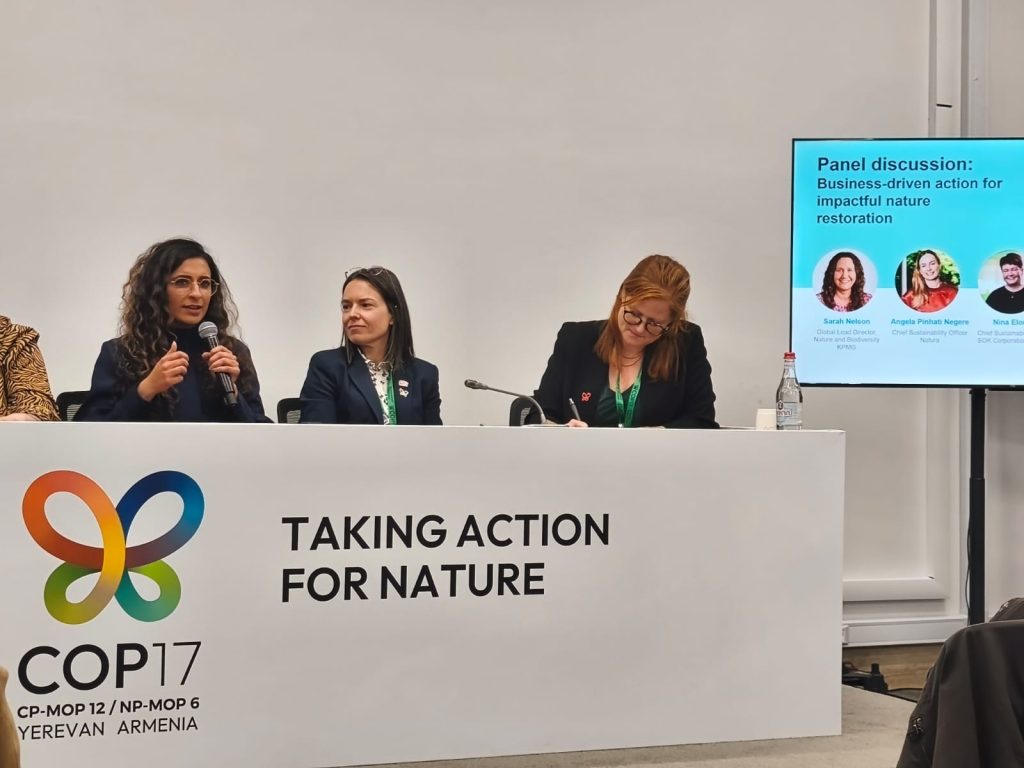
4. One line that stuck with you from COP17?
The line that stuck with Mahima the most was something Frank Elderson said during his keynote at COP17’s Finance and Biodiversity Day:
‘We have been consuming our capital and calling it income.’
Conclusion
Nature is critically becoming a financial concern and moving beyond the pages of a sustainability report. The institutions that measure nature impacts and risks at company level, and price them, will be the ones at an advantage when the standard arrives.
If you’d like to chat to our team about any of these insights in more detail, get in touch.