

We’re proud to share that GIST Impact contributed as a data provider to Nature in Portfolios: A Practical Framework for Investment Decision-Making, a new report from Northern Trust Asset Management (NTAM).
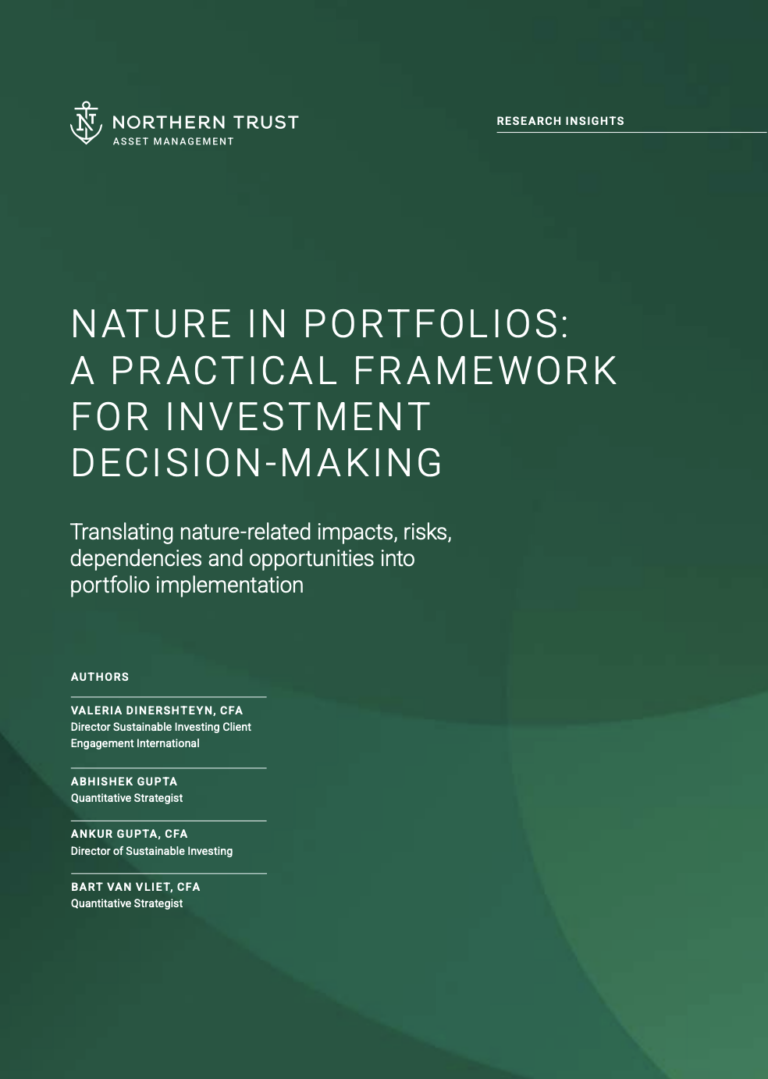
The report shows how nature data can and should be used in investment decisions today, and makes the case for nature and climate being addressed in tandem.
Why nature matters to investors
Nature underpins economic activity, from water supply to food production to resilient supply chains. As ecosystems come under pressure, companies face growing risks to costs, operations and long-term value.
For investors, the challenge has been turning that understanding into action. Nature data is still evolving, and few frameworks connect it to portfolio decisions.
NTAM’s report, published on 1 October, illustrates that the tide may be shifting.
A practical framework for nature in portfolios
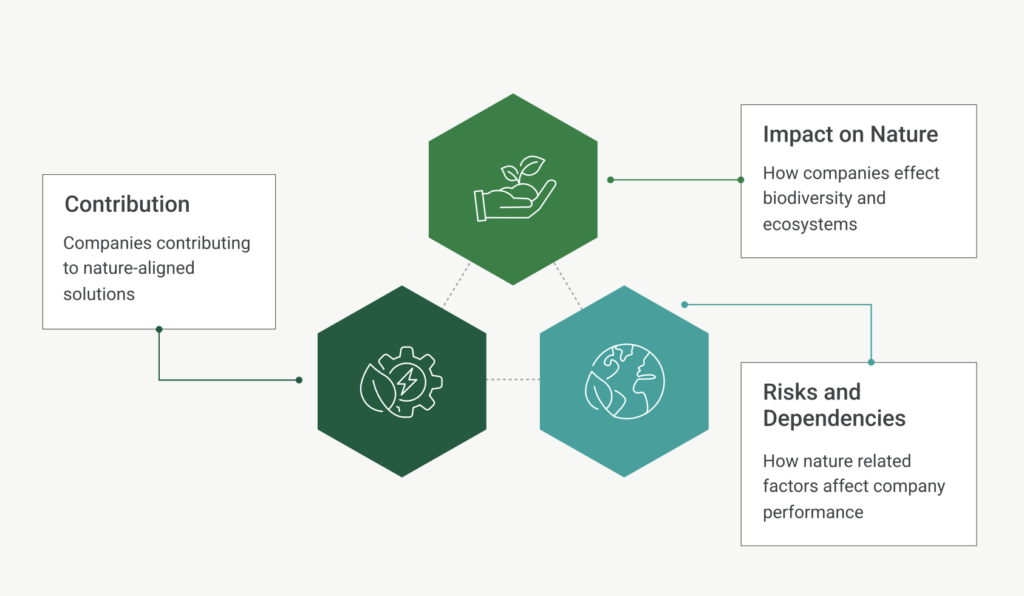
NTAM’s Nature Framework tackles this with three pillars: a company’s impact on nature, its risks and dependencies, and its contribution to nature-aligned outcomes. It focuses on what is financially material and uses the data available now, while staying adaptable as disclosure improves.
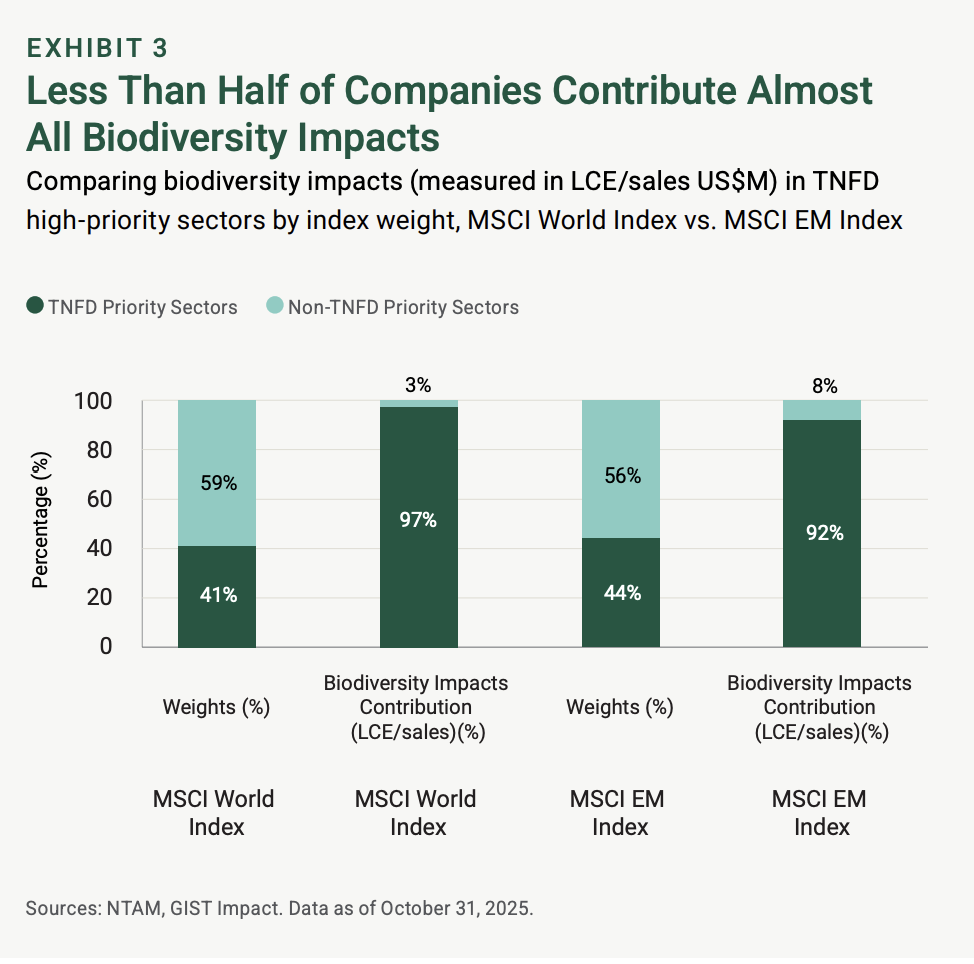
One finding stands out. Nature impacts are concentrated, with around 30 companies driving roughly two-thirds of the biodiversity footprint across the benchmarks analysed. That makes a targeted approach practical.
Nature and climate work together, not against each other
Many investors are still building out their climate strategies, and it’s easy to assume nature has to wait its turn.
However, climate change and nature loss are closely linked. Warming degrades ecosystems, and degraded ecosystems are less able to regulate the climate. Forests, wetlands, soils and oceans all act as natural carbon sinks. But carbon emissions alone don’t capture the full picture. Issues like water stress, land-use change and biodiversity loss need their own measures.
The report suggests investors can consider nature in parallel with climate transition planning, starting with the areas where the two overlap most, such as deforestation, water stress and the ecosystems that support climate mitigation and adaptation. Done this way, nature data adds to a climate strategy rather than diluting the focus on decarbonisation or net zero.
No need to overhaul your portfolio
A key message of the research is that nature data can be integrated into portfolios investors already hold. In NTAM’s analysis, applying the framework to a representative portfolio took only minimal tilting away from the benchmark, yet it still delivered on its nature objectives.
Those objectives included a significantly lower biodiversity footprint, reduced exposure to water-stressed locations, and a greater share of companies whose products and services support nature. Because impact is concentrated in a small number of companies, small, targeted adjustments were enough to make a real difference.
How GIST Impact’s data contributed
- Finding where nature impact is concentrated – We provided biodiversity footprint data that underpinned a central finding of NTAM’s research in that nature impact is highly concentrated. It showed that a small number of companies, in a limited set of sectors, account for most of the footprint across major global indices (see below image).
Showing that nature goals can sit close to the benchmark – Because the data could be applied across entire indices, NTAM could test how much a portfolio would need to change to reduce its biodiversity footprint. The analysis found that meaningful reductions can be achieved with modest deviation from the benchmark. Nature considerations don’t have to mean a wholesale overhaul.
- Managing water risk – Our data also contributed to NTAM’s analysis of water risk, which looked at where companies are exposed to water stress and how well they’re managing it. Separating exposed-but-prepared companies from exposed-and-unprepared ones is key insight for investors.
Putting nature data to work
We turn complex data into insight that supports decisions at scale. NTAM’s research is an excellent example of what’s possible when robust data meets a clear, materiality-led framework, and it shows the abundance of insight and detail that nature data unlocks.
We’re grateful to the NTAM team for the collaboration, and welcome their Nature Framework into this space.
—
Ready explore our nature data? Chat to our team.